
Twelve on the team at its peak, and many more who came through as clinicians, partners, and collaborators. What follows is not a list of where everyone ended up. It is what they did here, in pursuit of the same mission.
It started with something he asked at a board meeting. What if? What if a mid-sized health system in Western Massachusetts stopped waiting for innovation to arrive from Boston and built the place itself. It was not an obvious proposition, and he made the case anyway.
As Baystate Health's Chief Information Officer he backed it with the rest of his agenda, standing up baytechIT and architecting PVIX, the regional health information exchange. TechSpring existed because someone senior enough to be cautious chose not to be.
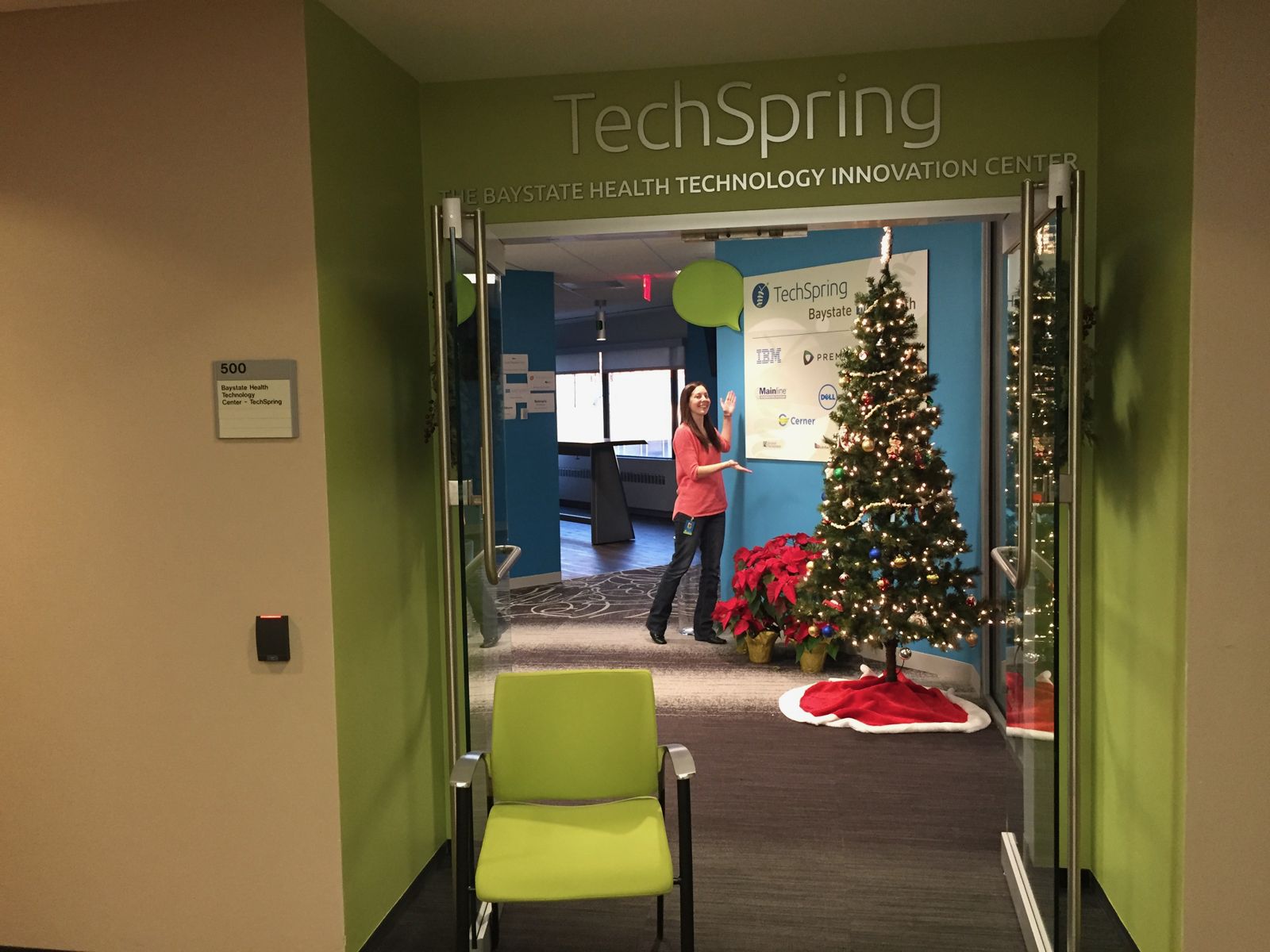
Took the question and made it operational. As Managing Director he conceived the innovation program, hired and built the team around it, and built the space itself on the fifth floor at 1350 Main Street. Three separate jobs, none of which had a template.
His conviction ran underneath all of it: healthcare's hardest problems are human before they are technical, and the fix has to be built with the people who will live with it.
"We're trying to bring these sides together in a place where we can democratize technology development."
Established the method that made innovation succeed here rather than merely happen, as thought leader for design and product thinking. Her discipline was unglamorous and decisive: watch people work, interview them with real empathy, and find the problem underneath the problem they described.
It is the least glamorous part of innovation and the part that determines whether anything survives the pilot. Almost everything that stuck at TechSpring came from that practice.
A scientist first, with disciplined curiosity for the seams where access, experience, operations and technology meet.
Senior Vice President for Quality and Population Health at Baystate Health. He put his name behind TechSpring before it had results to point at, and brought the population health lens to its early work, including leading the rising risk analytics project with Dell Services.
Chief Financial Officer and Treasurer of Baystate Health, where he had been since 1988. A CFO backing an innovation program with no proven return is not the obvious move. His support and his governance in the early years are a large part of why TechSpring got the runway to become something.
Chief Operating Officer of Baystate Medical Center. An internal champion for TechSpring and a key member of the Innovation Impact Committee, which oversaw every innovation project. Operations leaders are the ones who live with what innovation leaves behind, so his backing carried weight.
Senior Vice President and Chief Consumer Officer, Baystate Health. She backed expanding the use of human-centered design, helping carry the method beyond TechSpring's own projects and into how Baystate thought about the experience of the people it serves.
One of two CMIOs who supported the innovation program, and Senior Healthcare Innovation Strategist for TechSpring in its early years. A strong supporter of innovation who helped build the bridge to physician stakeholders across Baystate.
Baystate's CMIO after Neil Kudler. Like Neil, a strong supporter of innovation who helped build the bridge to physician stakeholders across the system, which is where most projects are won or lost.
Clinical partner on the remote maternal health program, monitoring blood pressure for prenatal and postpartum patients outside the clinic walls, including the high-risk patients where it mattered most.
Led many of TechSpring's innovation projects and partner relationships, including the remote maternal health program, from decision to live implementation in roughly six weeks.
Cut the ribbon on opening day and backed the center through the years it took to prove itself.
A persistent advocate for data democratization inside a health system that, like every health system, held its data close. He turned a stream of ad hoc requests into a process that could be reasoned about, which is what made the technical side of the program repeatable.
Managed innovation projects from the first conversation to the handoff, keeping partners, clinicians and Baystate teams moving in the same direction.
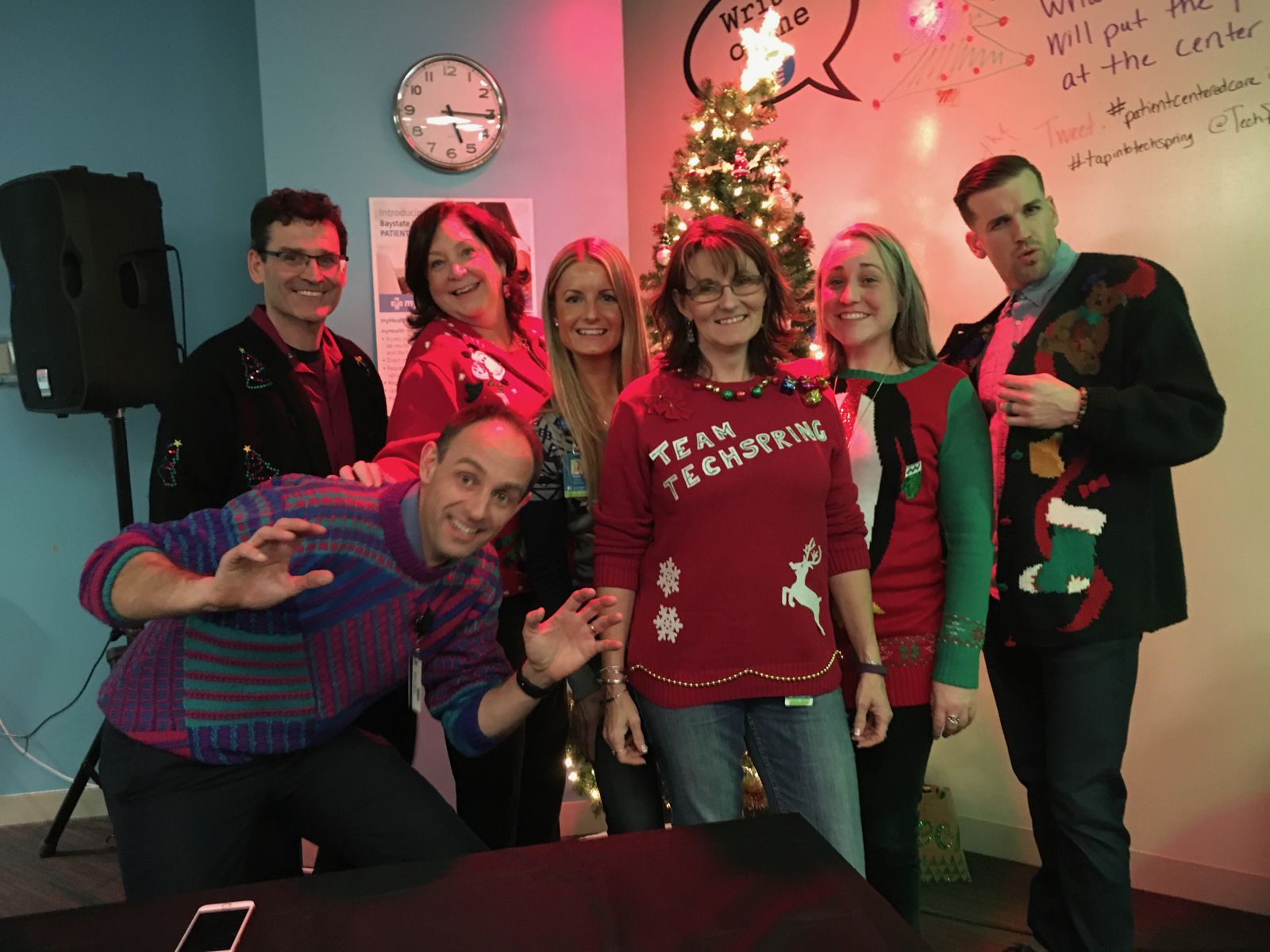
Led engagement with the community, the people and partners who came through the door, and the events that brought them together.
Kept the projects on track, through the governance steps and the work inside them.
The legal mastermind behind TechSpring's partnerships. Healthcare innovation agreements are hard: intellectual property, data use, privacy and liability all at once. He found the way through, which is what let outside innovators work inside a hospital at all.
And many others: fellows, coordinators, engineers, clinical champions and partner-company teams who made this place work day to day. If you want to be listed, send us a note.